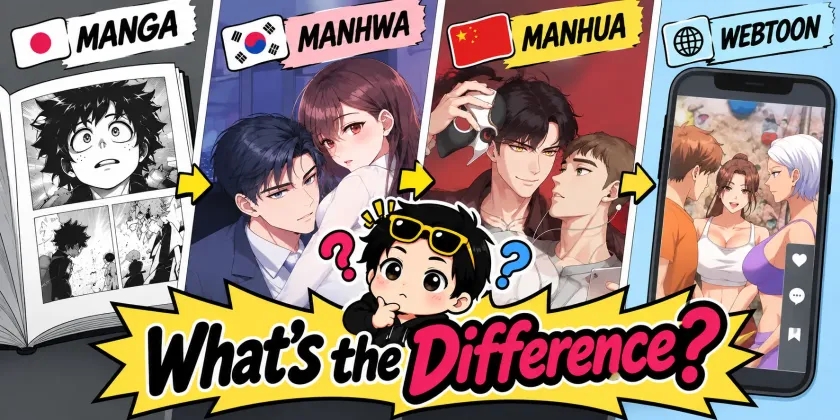
Stop Confusing These Terms: Webtoon, Manhwa, and Manga Explained

By Alex Corner
 Oct 1, 2026

What’s good, everyone? Alex here!
If you’ve ever gotten confused about the difference between manga, manhwa, and webtoon — you’re definitely not alone. The terminology is genuinely messy. Today I’m going to clear it up properly. Here's a straightforward explanation of what each term actually refers to—and why the confusion exists in the first place.
Let’s finally sort this out.
If you’ve ever searched webtoon vs manhwa vs manga, you’re not alone. A lot of readers are asking whether Solo Leveling is a manga or manhwa. The confusion is completely understandable.
The problem is that most explanations treat these three terms as if they belong to the same category, but they don’t. Manga, manhwa, and manhua are origin terms. They tell you which country a comic comes from — Japan, South Korea, or China. Webtoon, on the other hand, is a format term. It describes how the comic is made and read: vertical-scroll, digital-first, designed for phones. That’s the real difference. Once you separate origin from format, the whole picture becomes much clearer.
In this article, we’ll break down exactly what each term means, why the confusion exists, and how these categories actually overlap — so you can finally stop second-guessing what you’re reading. Once you’ve got the terms sorted, Sign up on HoneyToon and put your new knowledge to the test with hundreds of webtoons to explore.
The Short Answer
Here’s the cleanest way to understand the difference:
- Manga — comics from Japan. Traditionally, manga is created in black and white, presented in a page-based format, and read from right to left.
- Manhwa — comics from South Korea. Usually, manhwa is created in full color and read left to right. Most modern manhwa are published as webtoons.
- Manhua — comics from China. Often created in full color, and you have to read it from left to right.
- Webtoon is a digital-first comic format designed for smartphones — vertical-scrolling and usually full-color. Webtoons can come from Korea, Japan, China, or anywhere else.
So manga, manhwa, and manhua answer the question “from where?” and the Webtoon answers the question “in what form?”
What Is Manga?
Before comparing it to manhwa and webtoons, it helps to understand where manga came from and what makes it unique.
Origin & Meaning
Manga (漫画) is a comic that originates from Japan. The word Manga combines characters meaning “whimsical/impromptu” and “pictures/drawings.” It has been one of Japan’s dominant entertainment mediums for more than 70 years and remains hugely influential worldwide.
How Manga Looks and Reads
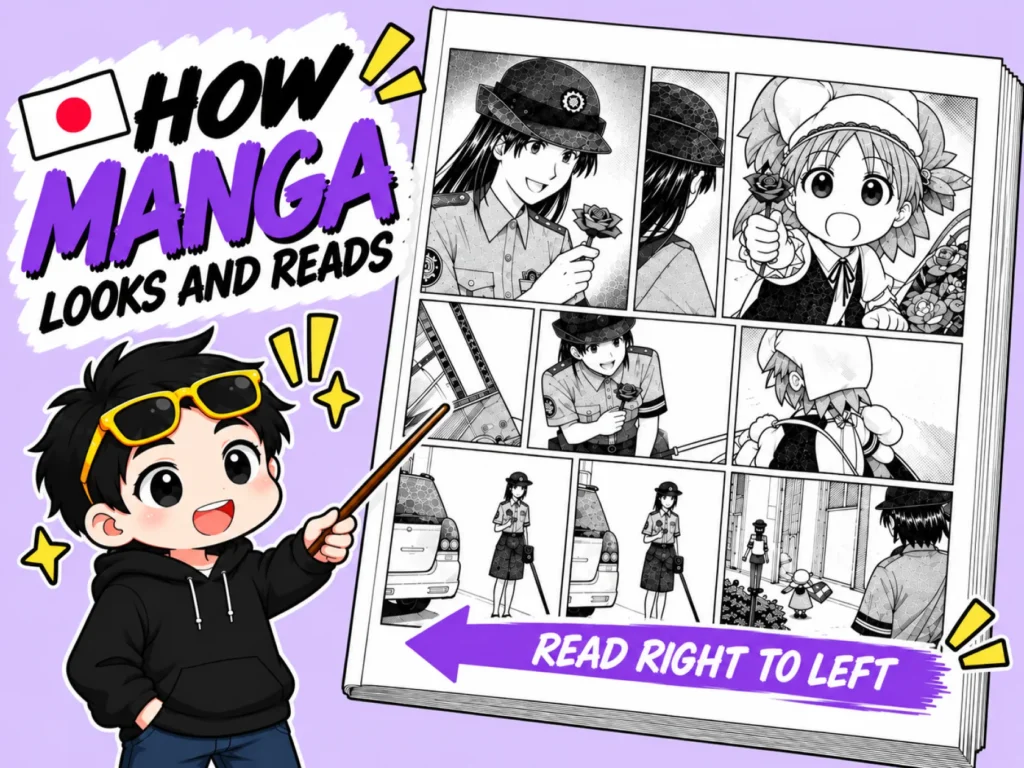
Traditional manga is almost always black and white. Full color is rare and usually reserved for covers or special editions. The reading direction is right to left — both for individual panels and for the overall page order. Manga uses a page-based layout with varied panel shapes (called koma), which allows for flexible pacing and dramatic composition.
How It’s Made and Published
Manga has a strong print-first tradition, with series typically serialized in weekly or monthly magazines before being collected into paperback volumes known as tankōbon. Many manga are created by a single mangaka (author-artist), often with the help of assistants. Major publishers include Shueisha and Kodansha.
Genres & Demographics
The most popular manga genres are:
- Action — a genre focused on adventure, intense conflicts, thrilling battles, and dangerous quests.
- Romance (adult) — a genre where love and relationships are the central themes of the story.
- Isekai — a fantasy genre centered on stories where characters are transported, reincarnated, or otherwise find themselves in a magical or unfamiliar world.
- Mecha — a genre featuring giant robots, advanced machines, and the battles or adventures of the characters who operate them.
- Slice of life — focuses on everyday experiences, relationships, and the ordinary moments of characters’ lives.
Also, manga has a well-established demographic system that shapes both style and content:
- Shōnen — targeted at boys
- Shōjo — targeted at girls
- Seinen — targeted at young adult men
- Josei — targeted at young adult women
What Is Manhwa?
Next up is manhwa, the Korean comic tradition behind many of the biggest hits on your phone today.
Origin & Meaning
Manhwa (만화) is the Korean term for comics — the direct equivalent of the Japanese term manga. It simply means comics that come from South Korea. Manhwa became popular in the 1920s and grew significantly in popularity through the 1950s and 1960s. Today it is one of the most widely consumed comic traditions in the world, largely thanks to the global success of digital platforms. The most world-known examples of manhwa include Solo Leveling, Tower of God, and True Beauty.
How Manhwa Looks and Reads
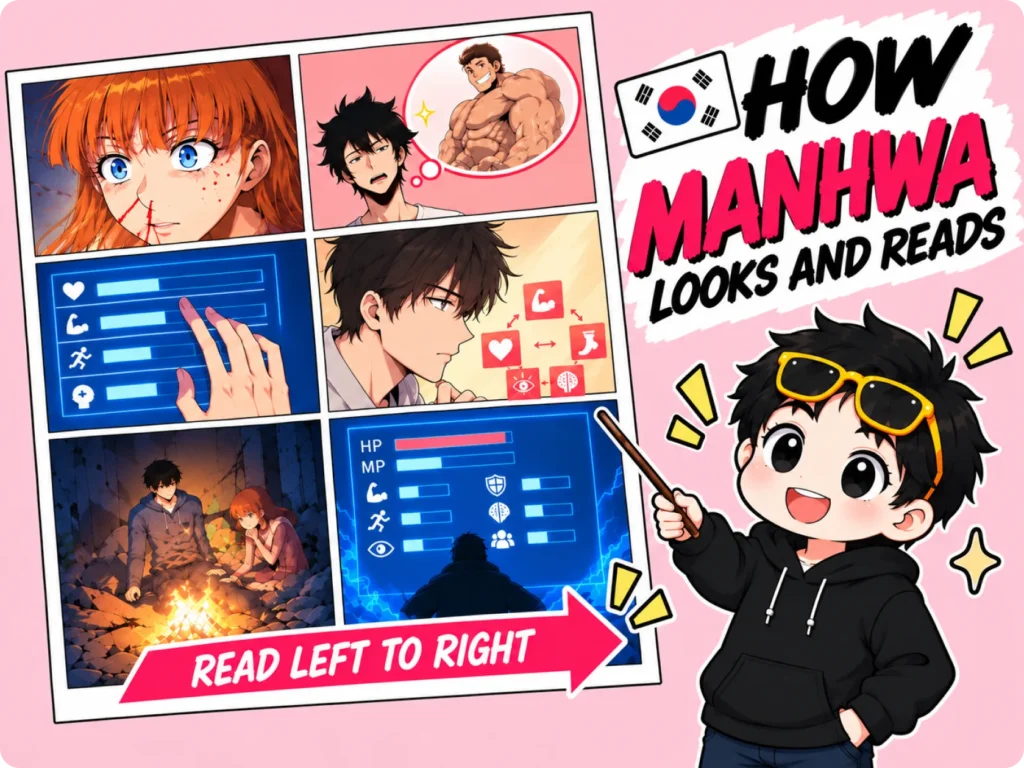
Modern manhwa is usually full color and read left to right, matching both Korean writing conventions and Western reading habits, while older print manhwa was often black and white. The visual style tends to be clean and character-focused, with strong emphasis on expressive faces and cinematic pacing.
How It’s Made
Compared to manga’s frequent solo-creator model, manhwa is more often produced by a writer + artist team or by a full studio. This collaborative approach became especially common as digital serialization grew, allowing for consistent weekly releases and higher production values.
The Webtoon Connection
This is the main source of confusion. Most commercially successful manhwa today are published as webtoons — vertical-scroll, digital-first comics designed for phones. Because the webtoon format became so dominant in Korea, people often use “manhwa” and “webtoon” as if they mean the same thing. In reality, manhwa refers to the origin (Korea), while webtoon refers to the format.
What Is Manhua?
Manhua is the third origin term in the trio, and it covers comics from the Chinese-speaking world.
Origin & Format
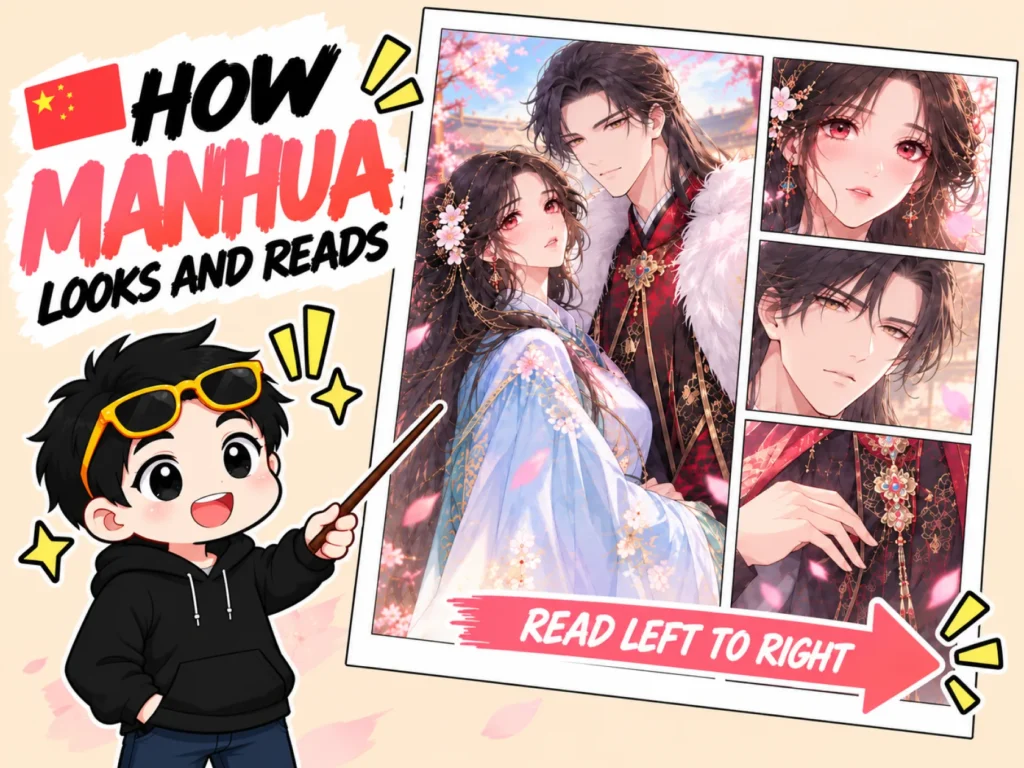
Manhua (漫画) is the Chinese term for comics. It covers comics from mainland China as well as traditions from Taiwan and Hong Kong. Modern manhua is typically read left to right and is often published in full color. Like Korean manhwa, much of today’s manhua is digital-first, though print versions still exist.
What It’s Known For
Manhua is especially strong in cultivation and xianxia fantasy, historical settings, and reincarnation stories. The art often features rich digital coloring and a distinct rendering style that sets it apart from both manga and Korean manhwa. A well-known example is Magic Emperor.
While manhua is less globally dominant than manga or Korean webtoon-format manhwa, it has a large and growing audience — particularly among readers who enjoy long-form fantasy and progression-driven stories.
What Is a Webtoon? (And Why It’s Not the Same Kind of Word)
Here’s where the confusion usually starts, because webtoon isn’t an origin term at all.
A Format, Not a Country
Webtoon is a comic format, not a term that refers to comics from a specific country of origin. This is the core distinction that most articles miss. Manga, manhwa, and manhua tell you where a comic comes from. Webtoon tells you how it is made and read.
A webtoon is a digital comic format that originated in South Korea around the year 2000. The word itself is a blend of “web” and “cartoon.” Importantly, it is origin-agnostic — a webtoon can be Korean, Japanese, Chinese, or original English-language (OEL). The term describes the delivery format, not the nationality of the creator.
Some of the best-known platforms for publishing comics in the webtoon format include WEBTOON, Honeytoon, Tapas, Lezhin, Piccoma, and many others.
How the Webtoon Format Works
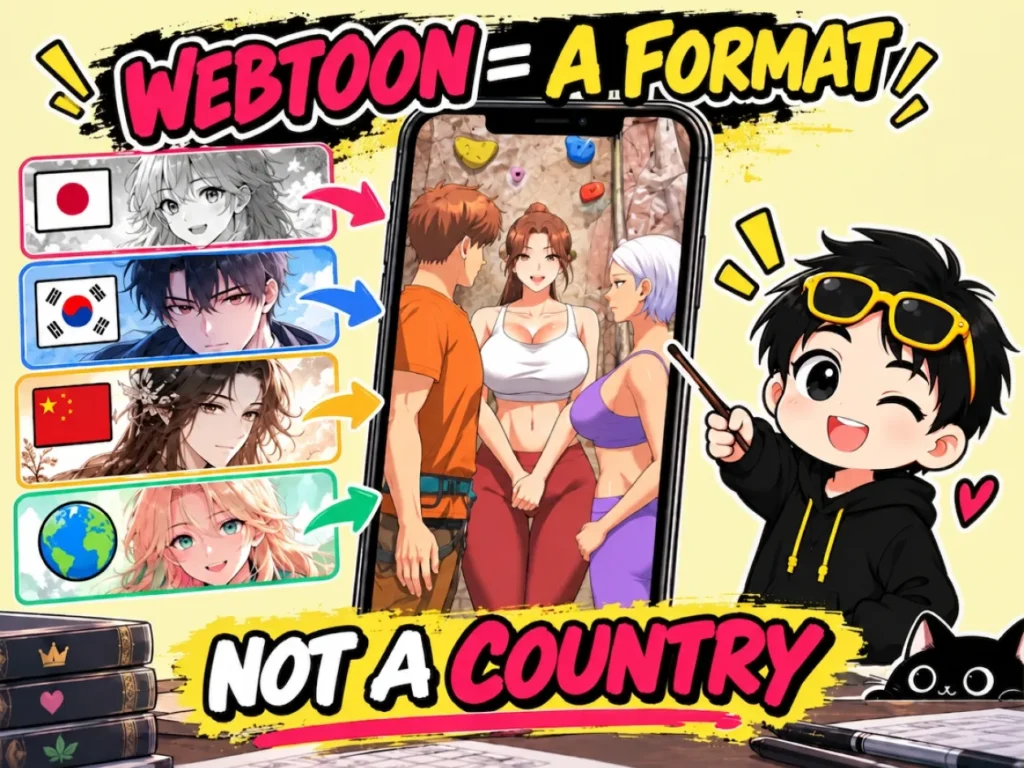
Webtoons are designed for continuous vertical scrolling on smartphones. Instead of traditional pages, they use an “infinite canvas” that the reader swipes through from top to bottom. They are almost always full color, because digital publishing removes the high cost of color printing. Episodes are typically released on a regular schedule and optimized for mobile screens.
Webtoon vs. WEBTOON — the Brand Confusion
One major source of confusion is that “Webtoon” is also a brand name. WEBTOON (in all capitals) refers to the specific platform owned by Naver. Lowercase “webtoon” refers to the format itself. Mixing the brand name with the format is one of the main reasons the terminology feels so messy.
Webtoon vs. Webcomic
Webtoons are also different from general webcomics. Most webcomics are still built around page layouts, even when published digitally. Webtoons, by contrast, are structured specifically for vertical scrolling. That difference in format is what defines them.
Comparison Table — Manga vs Manhwa vs Manhua vs Webtoon
| Manga | Manhwa | Manhua | Webtoon | |
|---|---|---|---|---|
| Type of term | Origin | Origin | Origin | Format |
| Country | Japan | South Korea | China | Any |
| Color | Black & white | Usually full color | Often full color | Full color |
| Reading direction | Right to left | Left to right | Left to right | Top to bottom (scroll) |
| Layout | Pages, varied panels | Pages or vertical scroll | Pages or vertical scroll | Vertical scroll, no pages |
| Primary medium | Print-first | Digital-dominant | Digital-dominant | Digital only |
| Typical creator setup | Mangaka + assistants | Writer + artist/studio | Studio | Varies |
| Release rhythm | Weekly/monthly chapters | Weekly episodes | Weekly episodes | Weekly episodes |
| Read on | Volumes, apps | Appes, web | Appes, web | Appes, web |
Why Are They Different? The Reason Behind the Format
So, let’s take a look at Webtoon vs Manga and explore the key differences between them, starting with the medium each format was built for.
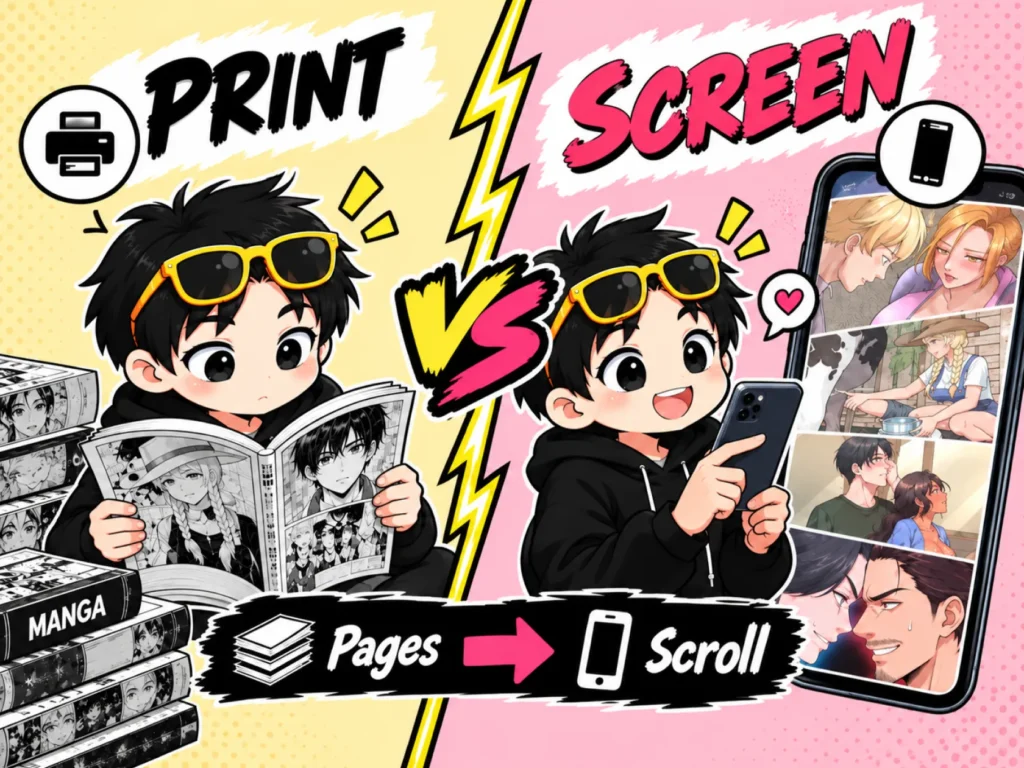
Manga’s Black-and-White Is a Print Decision
Traditional manga is black and white because it grew out of print publishing. Weekly serialization in magazines made full-color printing extremely expensive. Black-and-white pages were the practical solution that allowed creators and publishers to produce high volumes of content at a manageable cost. That economic reality shaped the look of the entire medium. Manhwa has a strong print tradition and, like manga, was historically published in black and white. Today, however, modern manhwa is predominantly full-color and digital, unlike manga.
Webtoons Are Full Color Because Screens Are Free
Webtoons developed in a digital environment. On a screen, color costs almost nothing. There is no paper, no printing press, and no extra expense for full-color pages. As a result, nearly every webtoon is published in color from the beginning.
The Vertical Scroll Is a Phone Decision
The vertical-scroll format exists because webtoons were designed for smartphones. Swiping down is the most natural gesture on a phone, so the “infinite canvas” replaced traditional page turns. Format follows the delivery medium — and that is the real reason these comics look and read so differently.
How to Tell What You’re Reading
How to tell if something is manga or manhwa, or a webtoon? Here’s a simple way to understand:
- Reading direction: Right to left → almost certainly manga. Left to right → likely manhwa or manhua.
- Color: Black and white → usually manga. Full color → more often manhwa, manhua, or a webtoon.
- Layout: Traditional pages with panel grids → manga (or older print manhwa). Continuous vertical scroll made for phones → webtoon.
- Origin clues: Japanese names and publishers (Shueisha, Kodansha) → manga. Korean platforms or creators → often manhwa in webtoon format. Chinese cultivation or xianxia themes → often manhua.
The fastest method is to check three things: reading direction, color, and layout. Once you combine those, the category usually becomes clear.
Common Mistakes (And Why Everyone Makes Them)
These mix-ups show up constantly — and they’re easy to understand once you see where they come from.
“Solo Leveling is a manga”
I think this is the most common one. Solo Leveling feels familiar to people who grew up with manga, so that’s why the label sticks. In reality, it is a Korean manhwa published in the webtoon format.
“Manhwa and webtoon mean the same thing”
But they don’t mean the same thing. Manhwa tells you the comic is from Korea. Webtoon tells you it uses the vertical-scroll digital format. Most popular manhwa today are webtoons, which is why the two words get blurred — but they still describe different things.
“All webtoons are Korean”
This statement is not entirely accurate. The webtoon format was developed in Korea, but it is now used by creators from around the world. Japanese, Chinese, and original English-language webtoons all exist. The country of origin and the format are two separate things.
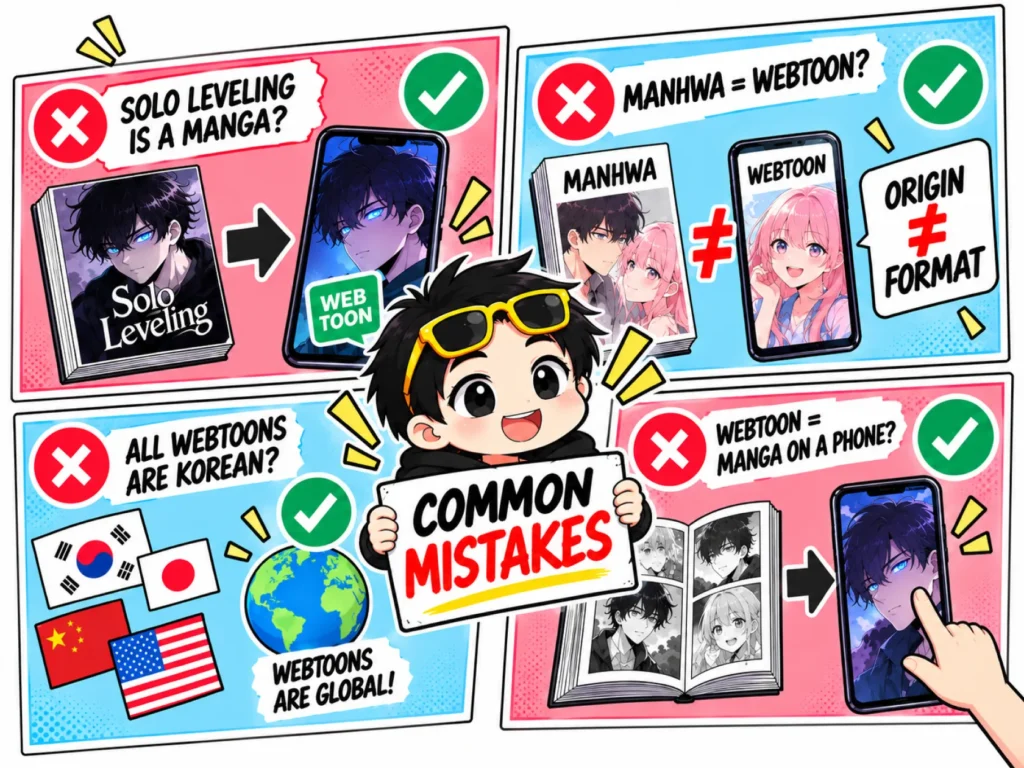
“Webtoons are just manga on a phone”
This misses the real difference. Manga is page-based and grew out of print. Webtoons were designed from the start for continuous vertical scrolling on mobile screens. It’s not simply manga moved online — it’s a different format.
Which Should You Read?
Now that the terms are clear, here’s a simple way to choose what to pick up next.
Read Manga If You Want…
- Black-and-white, page-based storytelling
- A huge catalog of long-running series and classic genres
- The traditional right-to-left reading experience
- Strong demographic categories like shōnen, seinen, shōjo, and josei
Read Manhwa / Webtoons If You Want…
- Full-color comics designed for vertical scrolling on phones
- Easy mobile reading
- Fast, modern pacing and cinematic paneling
- Popular genres such as regression fantasy, action, romance, and drama
Read Manhua If You Want…
- Cultivation, xianxia, and long-form progression fantasy
- Full-color digital art with a distinct visual style
- Stories that often focus on reincarnation and historical settings
There’s no single best option — it depends on the kind of experience you’re looking for. Plenty of readers end up enjoying all three.


Now that we’ve sorted out what each term actually means, the only thing left to do is pick something good and start reading.
Thanks for sticking with me — hope this made things clearer. Enjoy your next articles!
— Alex